
Wise Pilgrim Camino Francés
Wise Pilgrim GuidesTravel & Local
3.830.00 Reviews
- Version
- 6.5.0
- Installs
- 10.00K
- Age Rating
- Everyone
Screenshots
Our Review of Wise Pilgrim Camino Francés
 Analysis by Appyee
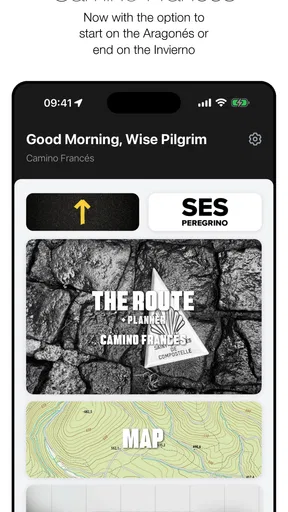
Planning the Camino Francés is easier when the information you need is close at hand, and that is the role I found for Wise Pilgrim Camino Francés. It is a paid Travel & Local app from Wise Pilgrim Guides, designed for the route between St. Jean Pied de Port and Santiago. I would not treat it as a complete replacement for judgment, local advice, or a printed backup, but I found it useful as a focused companion for a walker who wants route material in a form that can be checked while moving.
The app feels most appropriate for a person preparing seriously for the walk, rather than someone casually browsing destinations. Its store rating sits at 3.8 from around 138 ratings, and it has passed 10K+ installs. Those figures suggest a modest but established audience: enough use to make it a recognizable Camino tool, though not the kind of universally polished travel platform that tries to cover every possible need.
A practical Camino tool for shared planning
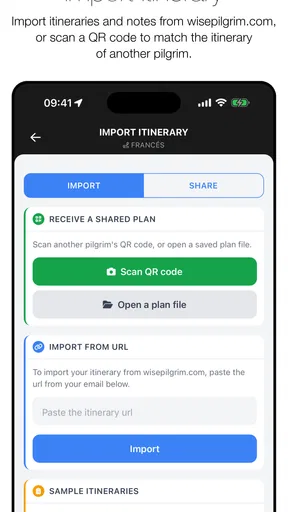
The most interesting household use is not handing the phone to several people at once. It is using one device as a shared planning point before and during the journey. A couple, parent and adult child, or small walking group can look at the next part of the route together, decide what information matters, and then let each person carry only the notes or decisions they actually need.
That distinction matters because a route guide is often used by more than one person, while the phone may belong to only one traveler. I would use the app at the kitchen table to discuss the day ahead, then check it again during a break rather than expecting every member of the group to interact with it constantly. This keeps the technology in a supporting role and avoids turning the walk into a series of screen checks.
For a shared device, I would also agree on a simple habit: one person handles route consultation, another confirms the group’s plan, and everyone knows that the app is a reference rather than the sole authority. That small boundary prevents a common problem on long walks, where one person assumes somebody else has checked the next decision point.
There is a useful trade-off here. A dedicated Camino guide is less distracting than opening a general search engine, social network, or broad travel app, because its purpose is narrower. At the same time, its narrow focus means it should not be the only tool used by a group that needs broad transport planning, live communication, translation, or emergency information.
What the first setup should accomplish
Before relying on the guide, I would spend time learning how it presents the route and where its important information sits. The best moment for this is at home, not after a tiring climb or while standing in an unfamiliar village. Open the sections you expect to use, check how quickly you can return to the route, and make sure every traveler understands what the app can and cannot do for the group.
This is especially important on a shared phone. A family member may be comfortable exploring menus, while another person may need a simpler explanation of where to look. I would show them how to find the relevant stage, how to read the information without rushing, and how to put the phone away again. The goal is not to create a technical expert; it is to make the device predictable under fatigue.
The app costs $4.49, so I see it as a small but deliberate purchase rather than an impulse download. That price makes more sense for someone who is genuinely considering the Camino Francés than for a person who only wants to read about the route. If several people in a household are planning the same trip, buying a single copy for a designated planning device may be sensible, but I would check the platform’s own sharing arrangements before assuming that one purchase covers every phone.
That is one of the boundaries I would establish early: decide which device is the main guide, which person keeps it charged, and where the backup information lives. The app can streamline route preparation, but it cannot solve a dead battery, a misplaced phone, or a disagreement about the day’s pace. A paper note, a known meeting point, and a basic communication plan remain sensible companions.
Coordinating a day without overplanning it
I found the strongest use case in short planning conversations. Instead of trying to map the entire pilgrimage in one sitting, a group can use the guide to prepare the next section, identify the decisions that deserve attention, and leave room for changing energy levels. This is more realistic than treating a long-distance walk as a fixed timetable.
One practical workflow is to review the next stage in the evening, agree on a comfortable starting approach, and then revisit the plan in the morning. The person carrying the phone can check the guide during a rest stop, while the rest of the group discusses whether to continue, pause, or adjust the day. This makes the app part of a conversation rather than a silent authority.
I would also avoid giving route responsibility to the fastest walker by default. The person who moves ahead may not be the one best placed to interpret information for the group. A better arrangement is to rotate the checking role or assign it to someone who is patient and willing to explain what they see. That is a small, non-obvious benefit of using a focused guide: it creates a clear moment for coordination instead of leaving everyone to consult different sources.
There is a limitation, however. A guidebook app is naturally less useful when the group’s main problem is live coordination between separated walkers. If people regularly split up, need constant messaging, or depend on current transport changes, a communication or mapping service will be better suited to that task. I would use this app to understand the Camino route, not as a substitute for every digital service needed on a multi-person trip.
It is also worth resisting the temptation to turn every stop into a research session. On a pilgrimage, the value of a guide is partly that it reduces uncertainty, not that it fills every quiet moment with information. I would decide in advance which questions matter for the next stretch and leave the rest for later. That approach saves battery, reduces decision fatigue, and keeps the walk from becoming an itinerary-management exercise.
Age, trust, and sensible independence
The content rating is Everyone, which fits the app’s role as a general route guide rather than an adult-only service. Still, an Everyone rating does not mean that every traveler can safely manage a long-distance route without support. A younger user may be able to read the guide perfectly well but still need an adult to handle decisions about fatigue, weather, separation, and unexpected changes.
For a household trip, I would give older children or less experienced walkers a limited but meaningful responsibility: they might check the next route section, remind the group when it is time to pause, or help compare the day’s plan with how everyone is actually feeling. The app can support that participation, but it should not be used to place the burden of navigation or safety on the least experienced person.
Trust works best when expectations are explicit. I would tell everyone that information shown in a guide still needs to be interpreted in context. A path can feel different in poor weather, after several hours of walking, or when a member of the group is struggling. The app should inform the decision, while the people present remain responsible for making it.
That principle is particularly important if one traveler is using a personal phone and another is borrowing it. I would avoid mixing private messages, personal accounts, or unrelated travel material into the shared planning process. Give the guide a clear place on the device, keep the screen available when the group needs it, and return the phone to its owner when the planning task is finished. This is simple household etiquette, but it prevents confusion during a tiring day.
Because the developer is Wise Pilgrim Guides and the product is specifically focused on the Camino Francés, I see it as more purposeful than a generic map application for this journey. A general map may be superior when I need to compare many transport options or search broadly around a town. This app is more appealing when my attention is on the pilgrimage itself and I want the route experience framed around that single objective.
Where it fits beside ordinary alternatives
The usual alternative is a general mapping app. That option is familiar, often excellent for finding a street, and useful when the group needs live directions to a shop or station. Its weakness is that it can make a long route feel like a collection of isolated points. A dedicated Camino guide has a better chance of keeping the journey’s sequence and walking context in view.
Another alternative is a printed guidebook. Paper is dependable when batteries are low, easy to share around a table, and comfortable for people who dislike reading on a phone. It can also be slower to consult during a brief stop, and carrying it adds physical bulk. I would not choose between paper and this app as if one automatically invalidated the other. For a serious walk, the combination can be more resilient than either alone.
Free web pages and travel forums are useful for fresh opinions and broad research, but they can scatter attention across conflicting recommendations. The focused nature of Wise Pilgrim Guides’ app is its main advantage in that comparison. I can prepare around one route rather than repeatedly filtering unrelated material. The cost is that I am paying for specialization, so the purchase is harder to justify if my trip is still only a vague idea.
The app’s current version is 6.5.0, and it supports devices running Android 7.0 or later. That makes checking the phone’s software compatibility part of preparation, especially if a household still uses an older handset as its shared travel device. I would test the app on the actual phone intended for the journey, not just assume that a newer family member’s device represents everyone’s experience.
That test should include practical conditions: can the intended user read the screen comfortably, can the device last through a normal walking day, and can the group consult the guide without passing the phone around dangerously while moving? These are not glamorous questions, but they determine whether a route app is genuinely helpful. A technically compatible app can still be a poor fit for a small screen, weak battery, or distracted user.
Who will appreciate it most
I would recommend this app to someone who has chosen the Camino Francés and wants a route-specific reference for preparation and daily decisions. It should also suit a couple or small group that prefers one shared source for discussing the walk. The focused coverage makes sense for travelers who want to reduce the number of separate tools they consult before setting out.
I would be more cautious about recommending it to a person who expects one application to manage every part of a pilgrimage. If your priority is live tracking between friends, broad sightseeing discovery, detailed transport searches, or a fully collaborative itinerary, a general travel toolkit may serve you better. Likewise, a traveler who strongly prefers paper may gain little from paying for a digital guide unless they are willing to use both formats together.
It is also not the right choice for someone who has not yet decided which Camino route to walk. Its value comes from commitment to this particular journey. If I were still comparing several pilgrimage routes, I would begin with broader research and only choose a route-specific guide once the destination and walking plan became real.
My household verdict after weighing the trade-offs
Wise Pilgrim Camino Francés works best when I treat it as a calm planning companion, not as a magic navigation solution. Its route-specific identity gives it a clear purpose, and the $4.49 price is reasonable for a traveler who will genuinely use a dedicated Camino reference. The rating of 3.8 shows that it is not a universally flawless experience, so I would approach it with practical expectations rather than assuming that a paid app removes every possible friction.
For shared use, the winning arrangement is simple: one prepared device, one agreed checking routine, and a backup plan that does not depend on the phone. Parents and experienced walkers should keep responsibility for safety decisions, while younger or newer travelers can use the guide to participate without being left alone with the burden of navigation.
My final recommendation is therefore specific. If the Camino Francés is your chosen route and you want a compact, dedicated guide to support conversations before and during the walk, I think this app is worth considering. If your household needs live group coordination or broad travel planning above all else, pair it with more suitable tools or choose a general mapping solution instead. Used within those boundaries, it can make the route feel more manageable while leaving the important decisions where they belong: with the people walking it.
Verdict
Strengths of Wise Pilgrim Camino Francés
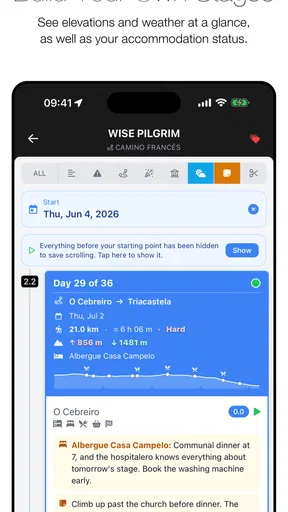
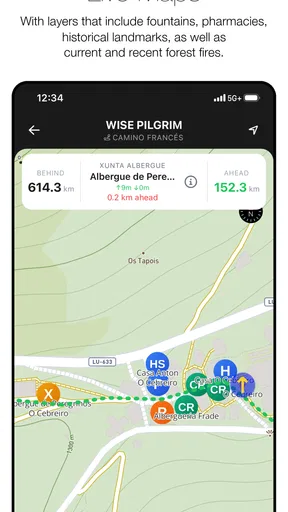
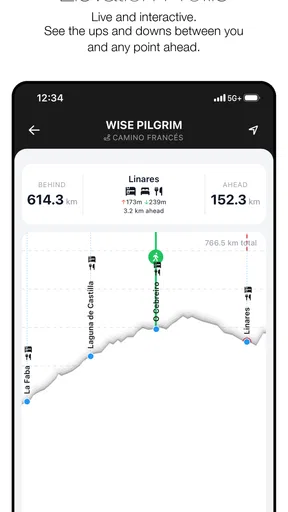
- Detailed stage maps with routes, elevation profiles, and key landmarks.
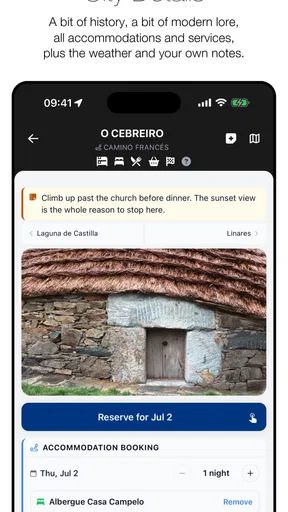
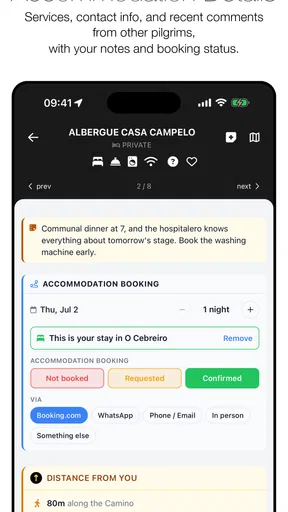
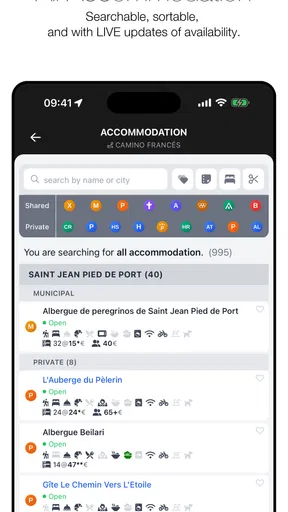
- Useful accommodation, food, water, and service listings along the Camino.
- Offline access helps when walking through areas with limited mobile coverage.
- Pilgrim-focused information supports planning before and during each stage.
- Simple interface makes essential trail details quick to find while walking.
Limitations of Wise Pilgrim Camino Francés
- Some listings and trail information may become outdated between app updates.
- The app focuses on the Francés route, limiting its usefulness for other Caminos.
- Offline features may require downloading content before starting the stage.
- Map and GPS use can drain the phone battery during long walking days.
- Some advanced content or tools may require an in-app purchase.
Other Releases by Wise Pilgrim Guides
View All
Wise Pilgrim Camino Portugués
Travel & Local2.5
Similar Picks in This Category
View All
Google Maps
Google LLC3.4

Google Maps Go
Google LLC4.1

Booking.com: Hotels & Travel
Booking.com Hotels & Vacation Rentals4.8

Google Earth
Google LLC3.8

Skyscanner Flights Hotels Cars
Skyscanner Ltd4.8

trivago: Compare hotel prices
trivago N.V.4.4
Frequently Asked Questions
What is Wise Pilgrim Camino Francés?
Wise Pilgrim Camino Francés is a mobile guide designed for pilgrims walking the French Way, or Camino Francés, to Santiago de Compostela. It provides route information, stage planning tools, maps, accommodation details, services, elevation data, and practical advice. The app is intended to complement, rather than replace, official signs, local information, and sensible preparation before and during the journey.
Does Wise Pilgrim Camino Francés work offline?
One of the app’s most useful features for pilgrims is access to important route information without relying constantly on mobile data. However, users should download or prepare the relevant content before entering areas with weak reception and keep their phone charged. Offline availability can vary by feature or app version, so it is wise to test maps and essential information before starting each stage.
What information does the app provide along the Camino Francés?
The app generally focuses on the practical details pilgrims need each day, including towns, albergues, hotels, restaurants, shops, pharmacies, transport options, water points, and other services near the route. It can also help with stage planning, distances, elevation changes, and points of interest. Availability and opening hours may change seasonally, so users should verify critical details locally.
Is Wise Pilgrim Camino Francés suitable for first-time pilgrims?
Yes, the app can be especially helpful for first-time pilgrims because it brings route planning and everyday logistical information together in one place. It may help users understand distances between villages, identify accommodation and services, and prepare for demanding stages. Nevertheless, beginners should not depend on the app alone; carrying basic supplies, following trail markers, and checking weather conditions remain essential.
Is Wise Pilgrim Camino Francés free to download and use?
The app’s availability, included features, and pricing may differ between Android and iOS and can change with updates. Some information may be accessible without payment, while advanced tools, complete route content, or additional guides may require an in-app purchase. Before downloading, check the current store listing for the exact price, supported device requirements, privacy details, and any optional purchases.
